Digital Learning & Artificial Intelligence (AI)
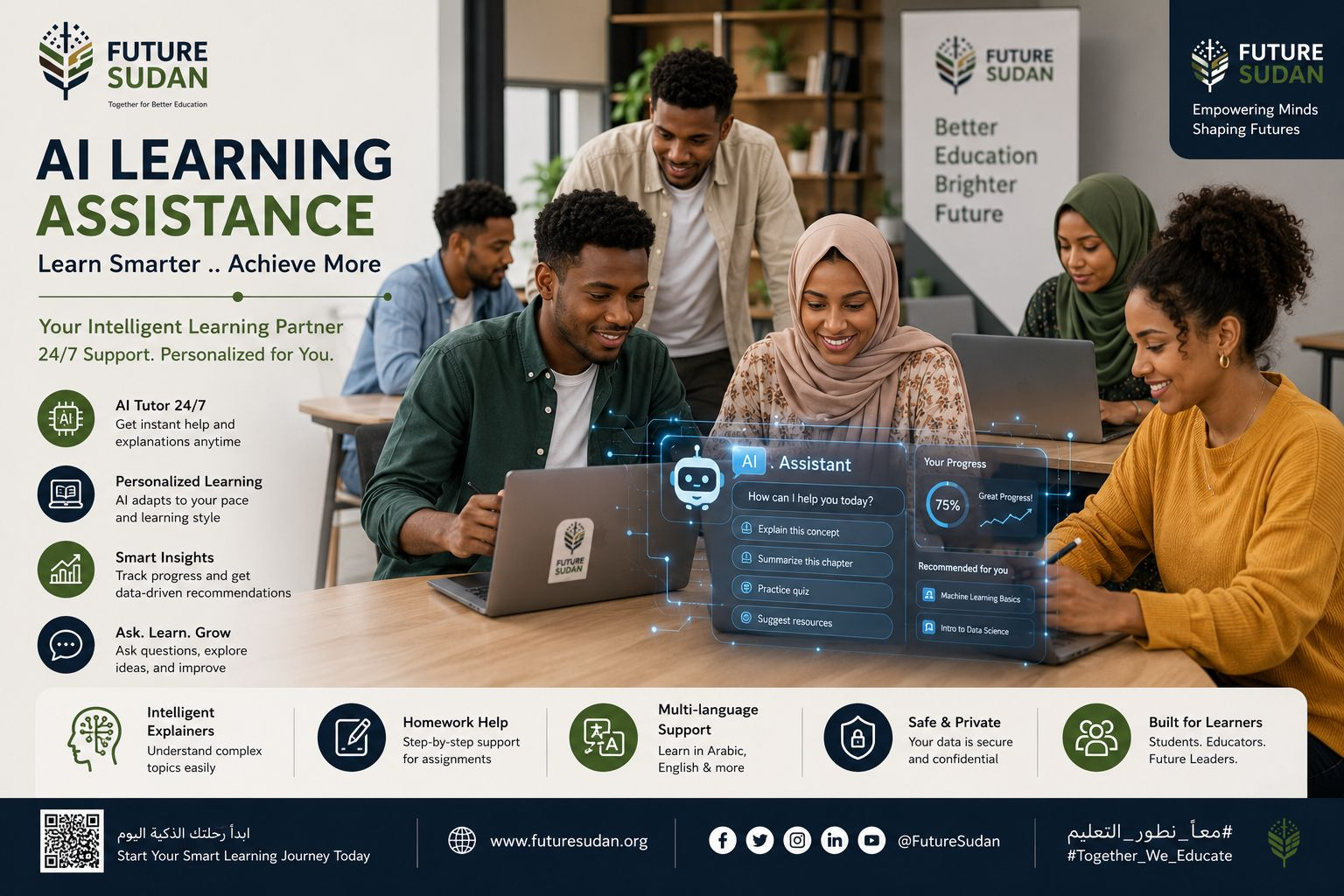
Future Sudan is committed to building a modern, technology-driven education ecosystem that expands learning opportunities for students across Sudan and displaced communities. Through digital learning and future AI-powered educational tools, we aim to make quality education more accessible, personalized, and effective for every learner.

For Students
As the platform grows, Future Sudan plans to integrate Artificial Intelligence (AI) solutions that can support students with homework assistance, personalized learning recommendations, academic guidance, study planning, and interactive learning experiences. AI-powered tools will help students better understand lessons, identify learning gaps, and receive additional support outside traditional classroom hours.
For Teachers
For teachers, AI technologies will provide innovative tools for lesson preparation, assignment management, student performance analysis, attendance tracking, and educational content development. These solutions will help educators focus more on teaching while improving learning outcomes and classroom engagement.
"Future Sudan also envisions the use of intelligent learning assistants, multilingual educational support, adaptive learning pathways, and data-driven insights that help students learn at their own pace and according to their individual needs."
Future AI-Powered Features
Developing scalable cloud intelligence modules to support recovery and academic growth.
Homework Assistance & Support
AI Tutoring & Guidance
Personalized Learning Pathways
Smart Study Recommendations
Virtual Learning Assistants
Automated Progress Tracking
Student Performance Analytics
Teacher Support & Lesson Tools
Intelligent Content Delivery
Multi-Language Learning Support
Scholarship & Career Guidance
Digital & Virtual Classrooms